Fixing Things That Don't Need Fixing
December 10th, 2025
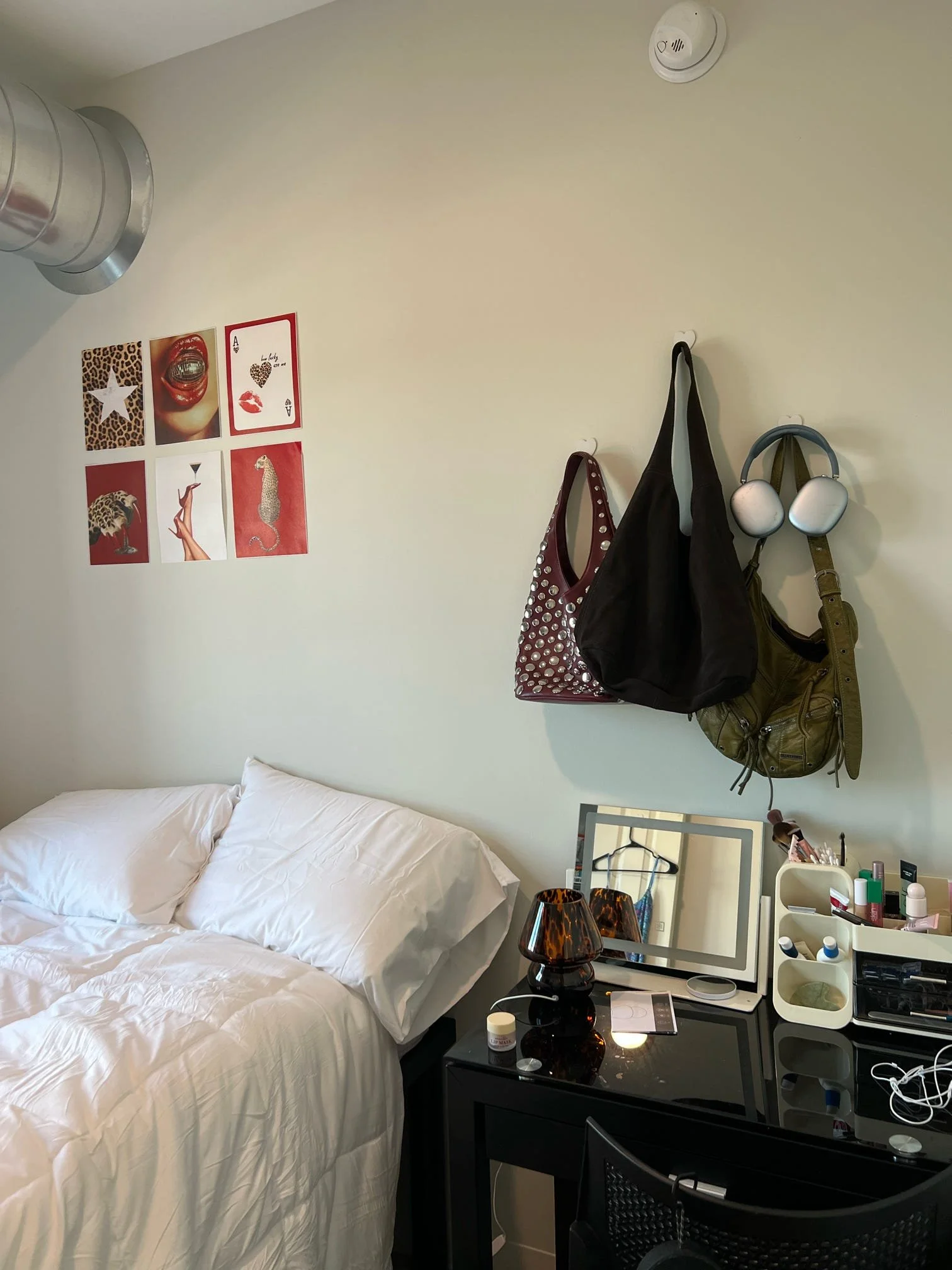
Photo: Danielle Bellamy
Writer: Aidan Lane
Editor: Sloan Spiewak
It starts small—it always does. A slightly off-centered picture frame above the bookshelf, or a sentence I texted that could sound a little too blunt. Time stills. My fingers reach for something to straighten, to edit, to make more “right.” I have this habit of fixing things that don’t really need to be fixed, as though every minor adjustment will allow the world to settle into place.
It’s not pure perfectionism. I don’t expect flawlessness from myself or from the world. Most of the time, I know the apology text has already landed where it should. The text was read, replied to, and probably forgotten. My bed is made, my desk is neat, and functional. Yet, there’s an ache under my skin when things are left just a little off. Stillness itself feels like a crooked frame hanging in my mind, something I’m supposed to nudge back into place. It’s an urge that comes less from chasing perfection and more from the discomfort of letting things be.
People see the visible parts of this habit: the orderly stack of books repositioned for the third time in a week, the carefully adjusted lamp, the apologetic “just making sure” texts, long after the conversation has ended. While some may chalk it up to attention to detail, beneath it all, it’s just a productive way for me to escape the strange discomfort of leaving things alone.
More times than I’d like to admit, I’ve sat on the edge of my bed obsessing over an already sent text, scrolling up to judge my tone and critique my wording. Did I make myself clear? Was I too much, or not enough? The other person’s reply is there, friendly and final, but I'll still craft and delete a new message, hoping to find a version of myself that fits perfectly in their eyes. Sometimes the urge wins, and another “Sorry, just to clarify” escapes out into the digital void. Other times, I catch myself and close my phone, riding out the discomfort.
In these moments, “fixing” becomes less about improvement and more about self-soothing. An apology accepted reduces my anxiety for a heartbeat, but trying to correct it lets me avoid the aftertaste of vulnerability just a little longer. I can feel like I’m moving toward safety, even if safety was already there. It’s a stalling tactic disguised as productivity—a way to distract from the deeper work of learning to trust what’s already set.
The truth is, the world won’t end if a picture frame stays crooked, my bed is unmade, or a message isn’t perfectly phrased. It will keep spinning, regardless of my corrections. But letting go—resisting the next tiny fix—feels as demanding as any marathon. It begs something radical: trust in myself and in acceptance, no matter how uncomfortable it may feel.
For now, I’m trying to let more things be. I won’t always succeed; the urge to tidy, to clarify, to make things “better” is still persistent. But in gentling that urge, in letting it soften rather than obeying it every time, maybe I’m fixing something, too: my own tolerance for a life that’s a little uneven, a little uncertain, yet completely, beautifully mine.